High-resistance structural steel
Designed for extreme marine conditions. Tolerance to loads, humidity, oxidation.
The materials
14 High Cube 40-foot shipping containers, some cut to 20 feet, are the campus primary structure. Corten steel pergola. 100% recycled steel sculptures renewed yearly. Every material decision has a story.
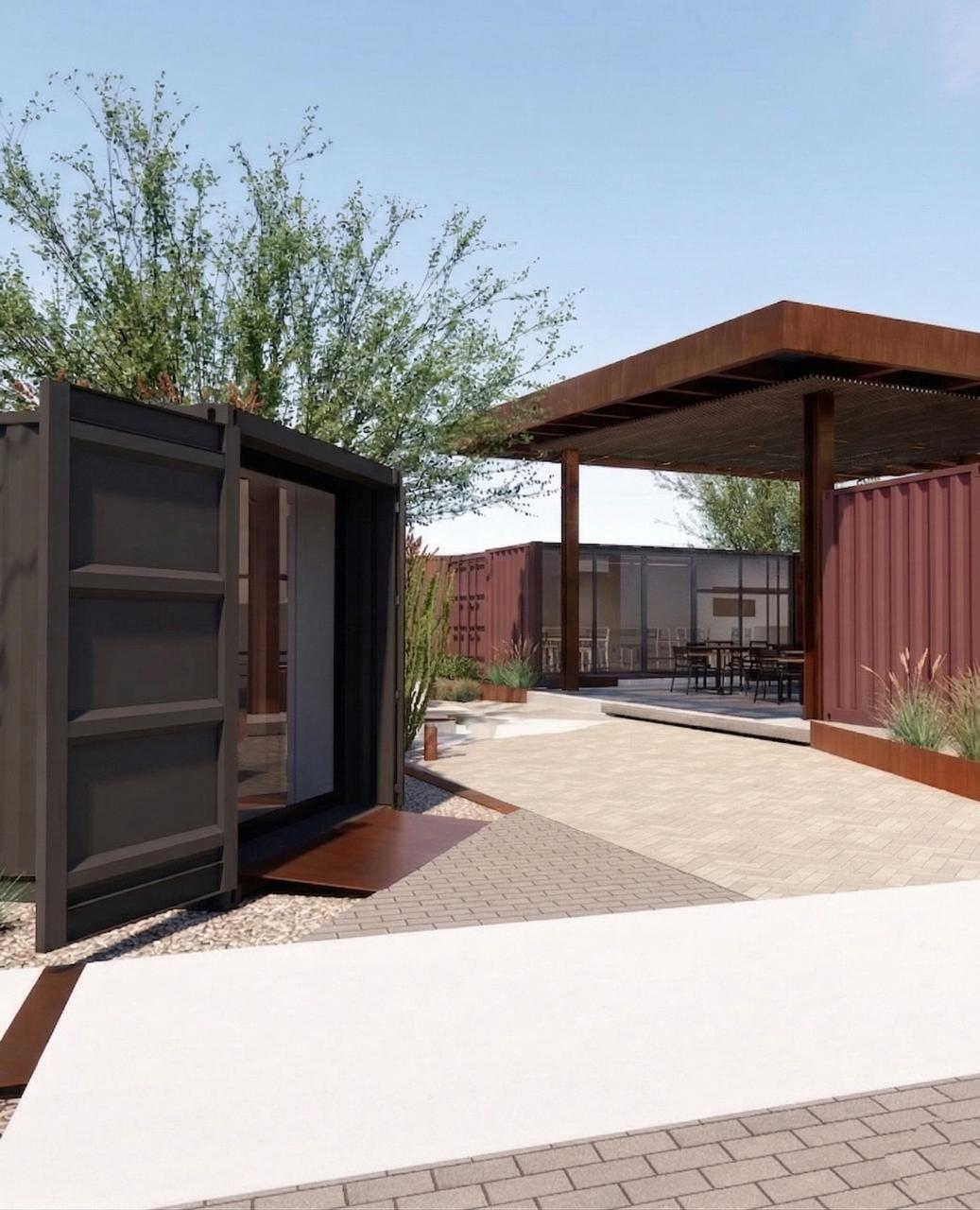
The 14 containers
Designed for extreme marine conditions. Tolerance to loads, humidity, oxidation.
Each container avoids ~3.5 tons CO₂eq vs new structure. 14 containers ≈ 49 tons CO₂eq avoided.
Primary structure arrives prefabricated. Significant reduction of civil works and waste.
Not aesthetics for aesthetics. It's material honesty: the container looks like what it is, no disguise.
Corten steel
Corten steel develops a protective oxidized patina that stops internal corrosion. No paint required, no periodic maintenance. It ages but doesn't degrade.
At Campus CIAE corten appears in the central courtyard pergola, in architectural accents, in stairs connecting stacked containers, in the courtyard bench. Provides visual continuity and dialogues with the regional Sonoran-Arizonan desert reference.
Sculptures
Five initial sculptures. One new each year. Previous ones renewed or redistributed. Public art asset + circular economy + recycled material transfer.
Potential LEED v5 Innovation Credit
The annual sculpture program is candidate for LEED v5 innovation credit. Combines accessible public art, renewable circular economy, recycled material technology transfer, and long-term verifiable institutional commitment. Tribo evaluates formal proposal with USGBC in documentation phase.
→ More at Innovation.
Other materials
Transparency: not everything is confirmed at MVP time. What remains pending is documented in Tribo and updated here when it arrives.
| Material | Use | Status |
|---|---|---|
| Corten steel | Courtyard pergola + accents + stairs | Confirmed |
| Recycled structural steel | Structural reinforcements | Pending confirmation 70-90% recycled (Ternium / DeAcero typical) |
| Low-carbon cement | Elevated foundation pads | Pending confirmation CPC 30/40 with additions |
| FSC-certified wood | Selected interior finishes | Pending confirmation |
| Low-VOC paints | Interior finishes | Confirmed |
| Low-VOC adhesives and sealants | Architectural sealing | Confirmed |
Construction waste
Campus CIAE construction generates waste like any building project. The difference is how it's managed: on-site separation plan + coordination with certified collection company.
Declared target: >75% of generated waste diverted from landfill through recycling, internal reuse or transfer to specialized processors. This supports the MRc5 credit at 100%.
Architectural reference
"The Campus CIAE project emerged from the group's internal convictions years before encountering MSA Annex by Studio Rick Joy in Tucson. The later encounter with that regional reference reinforced the direction, not originated it. Acknowledging it is part of respecting the Sonoran-Arizonan desert architectural dialogue."
The desert architectural dialogue crosses borders: corten steel, reused containers, native landscaping, passive hydrology. Campus CIAE participates in that conversation from Hermosillo, contributing its own climate response to the BWh zone.
LEED v5
MR category complete at 100%: 18/18 possible points including the Platinum-mandatory MRc2.
Project priority: PR4
Frequently asked questions